
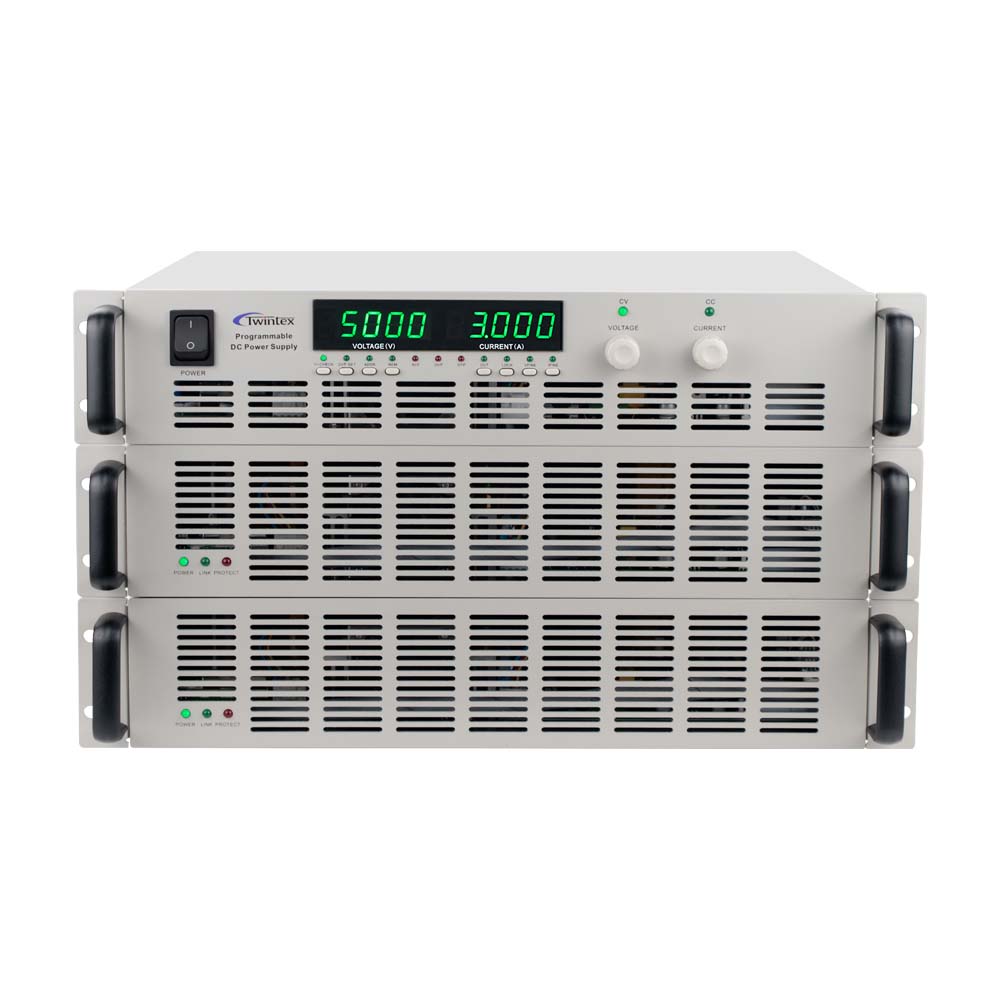
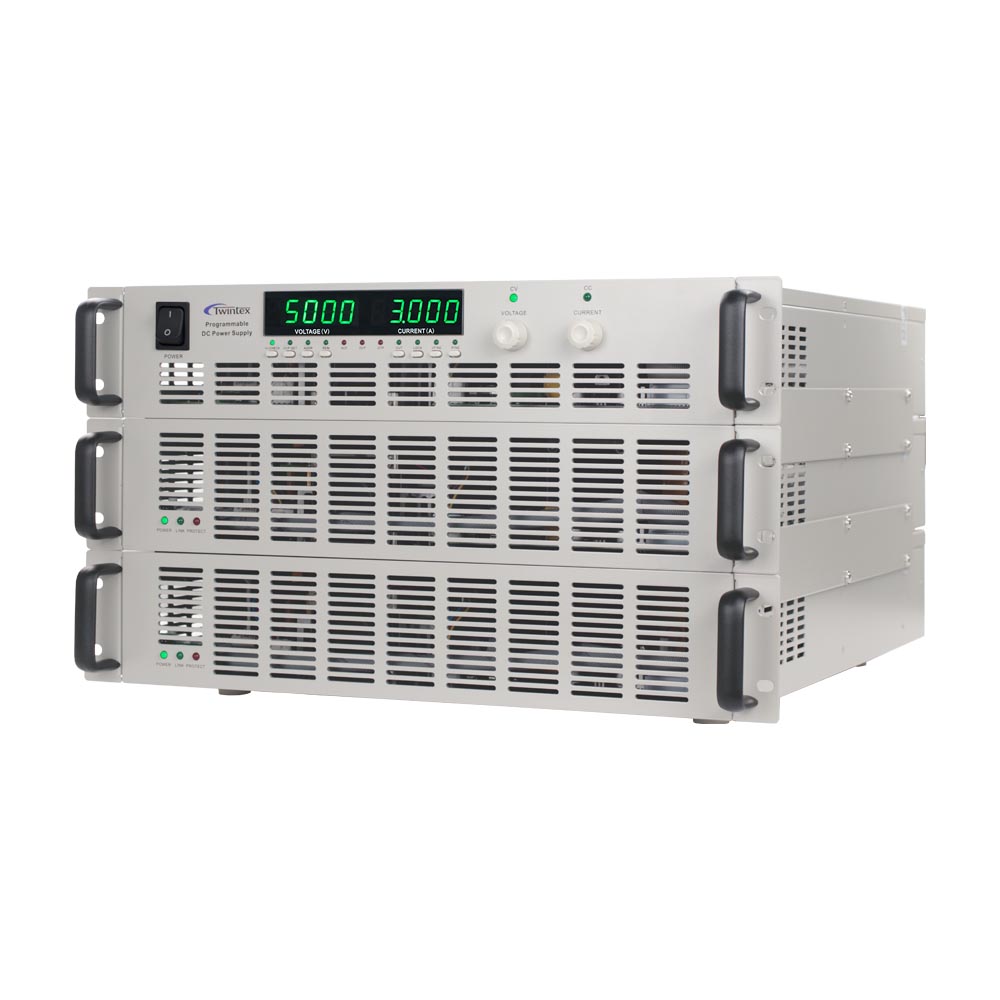
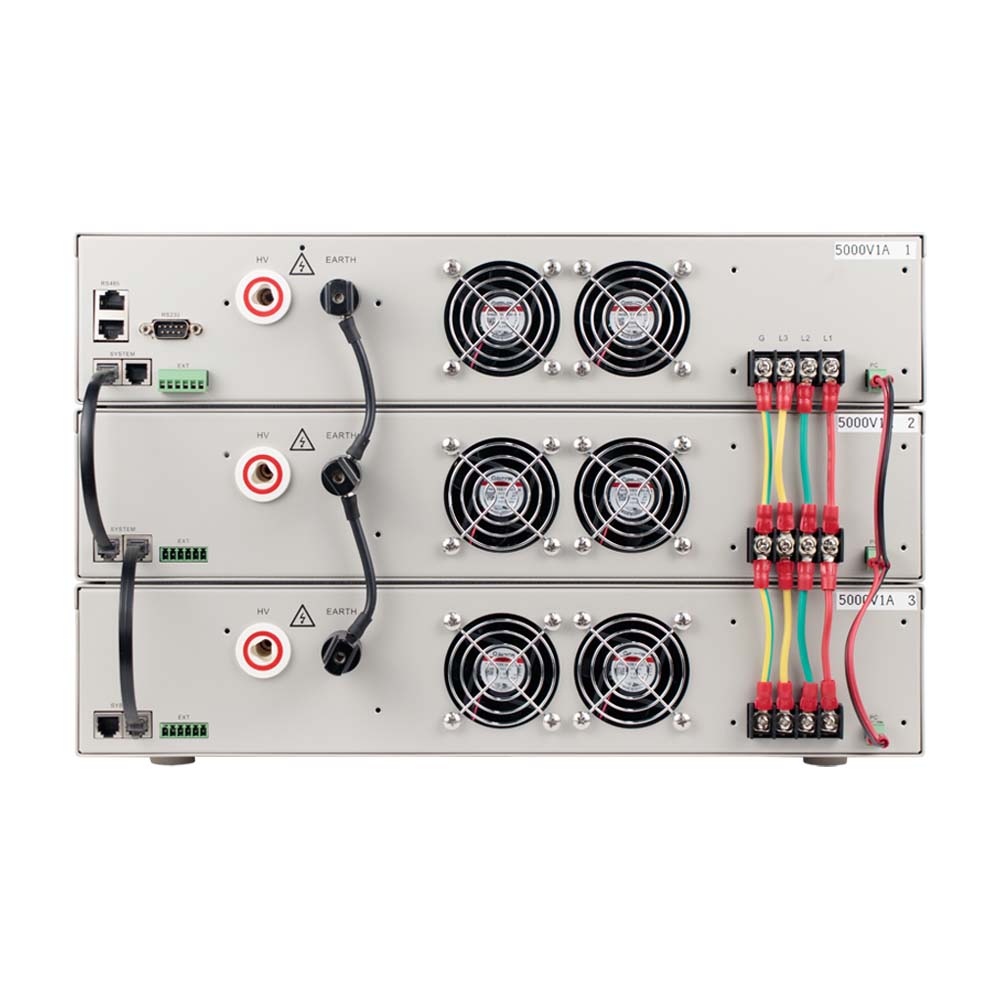
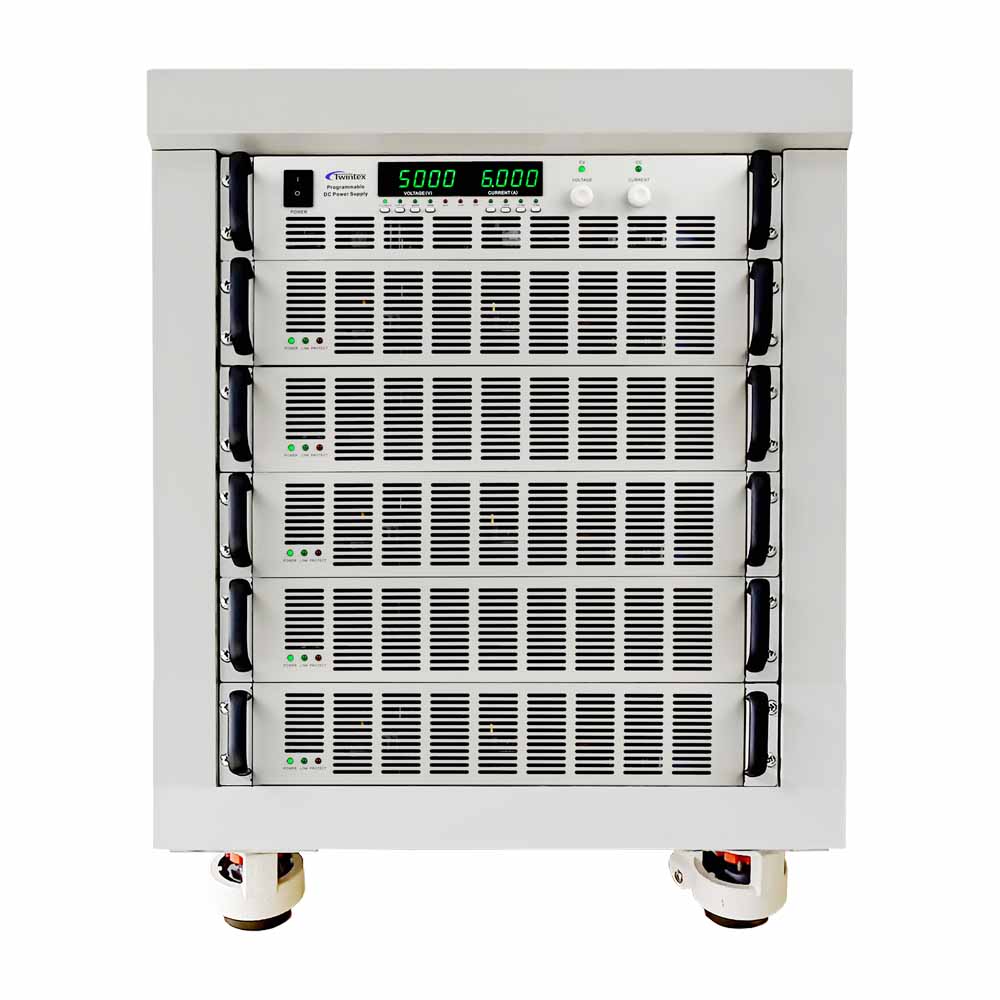
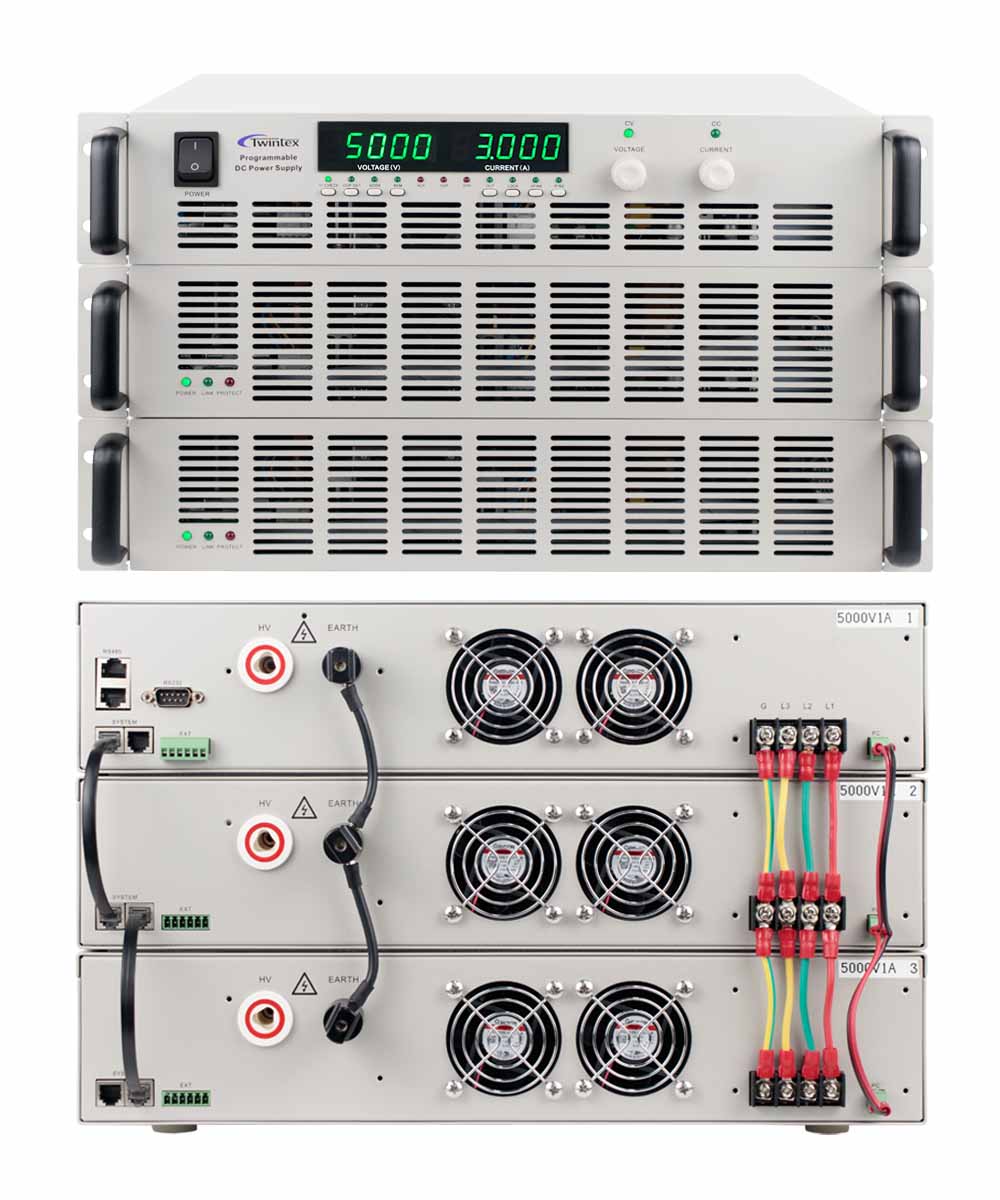
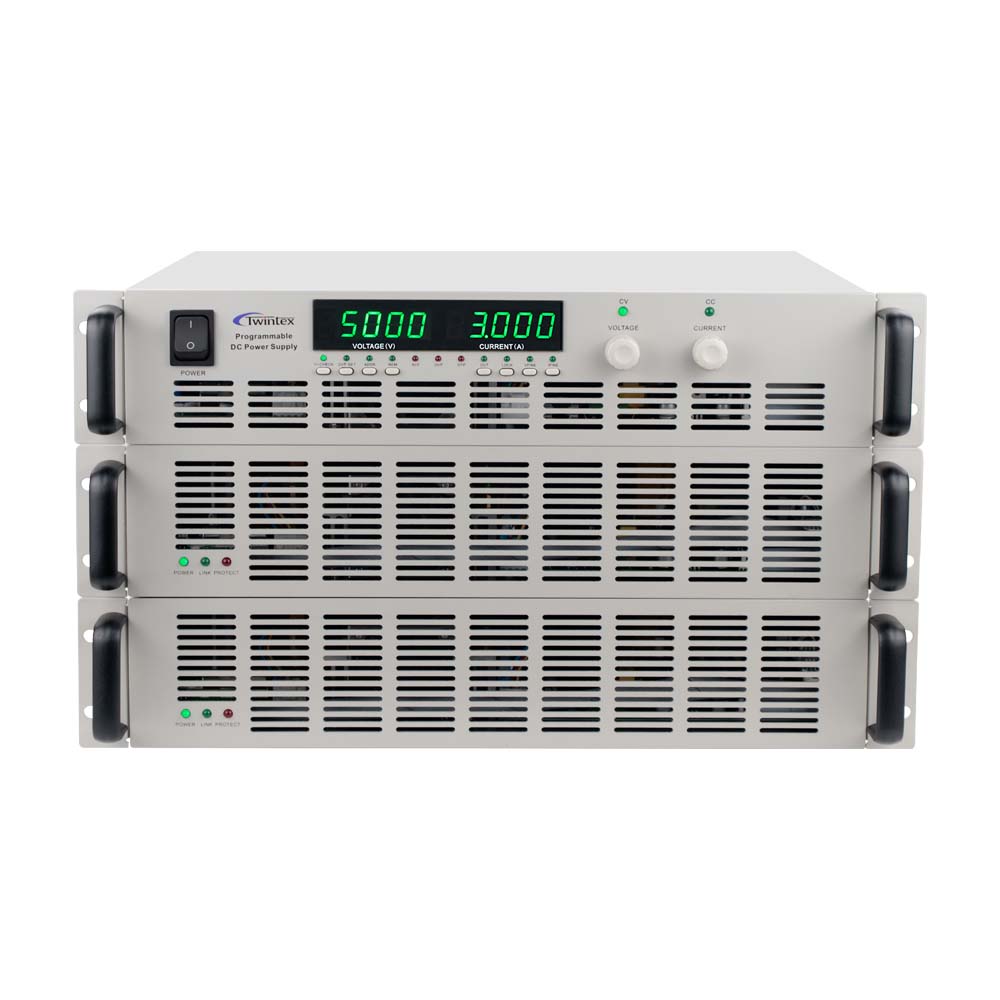
Twintex PCH 4000V (4kV) high-voltage and high-power DC power supplies are mainly used in sectors requiring extremely high voltage and substantial energy, such as advanced industrial manufacturing, new energy, scientific research, and national defense. Their core function is to deliver stable, controllable high-voltage and high-current output to meet the rigorous demands of specific processes or testing protocols.
Component burn-in testing represents the most fundamental application of 4000V (4kV) DC power supplies. In the burn-in testing of 3000V-4000V high-voltage devices, the PCH 4000V (4kV) DC power supplies in the 10kW to 80kW range play a pivotal role; they simulate extreme operating conditions to expose early-stage defects and verify long-term reliability of high-voltage power devices — whether in the form of wafers, discrete components, or power modules:
- Silicon-based power devices: such as IGBTs (Insulated Gate Bipolar Transistors), MOSFETs (Metal-Oxide-Semiconductor Field-Effect Transistors), thyristors, and VDMOS (Vertical Double-diffused MOSFETs).
- Wide-bandgap power devices: such as SiC MOSFETs (Silicon Carbide MOSFETs), SiC diodes, etc.
- High-voltage modules and components: such as high-voltage IGBT modules, power modules, high-voltage electron tubes, etc.
Different power ratings correspond to specific test subjects and scenarios:
- 4000V 10kW to 20kW DC Power Supply: Suitable for medium-to-high-power discrete devices (such as certain IGBTs and MOSFETs) and small power modules, or for use at individual stations within a multi-station parallel burn-in setup. Also applicable to high-voltage electrical aging tests for materials.
- 4000V 30kW to 40kW DC Power Supply: Suitable for high-power IGBT/MOSFET modules and high-voltage SiC modules; can be used to drive high-power electronic loads or for the burn-in of high-voltage capacitors.
- 4000V 60kW to 80kW DC Power Supply: Suitable for burn-in testing (including full-load tests) of ultra-high-power modules or complete assemblies (such as modules used in rail transportation and wind power converters).
Typical test methods generally employ the following aging modes:
- Constant-current aging: Maintain a constant output current while monitoring voltage changes.
- Constant-voltage aging: Maintain a constant output voltage while monitoring current changes.
- Cyclic aging: Cycle the power supply between voltage and current set points to simulate complex real-world operating conditions, thereby revealing potential issues more comprehensively.
 English
  Français
  Español
  Русский
  Português